 111
111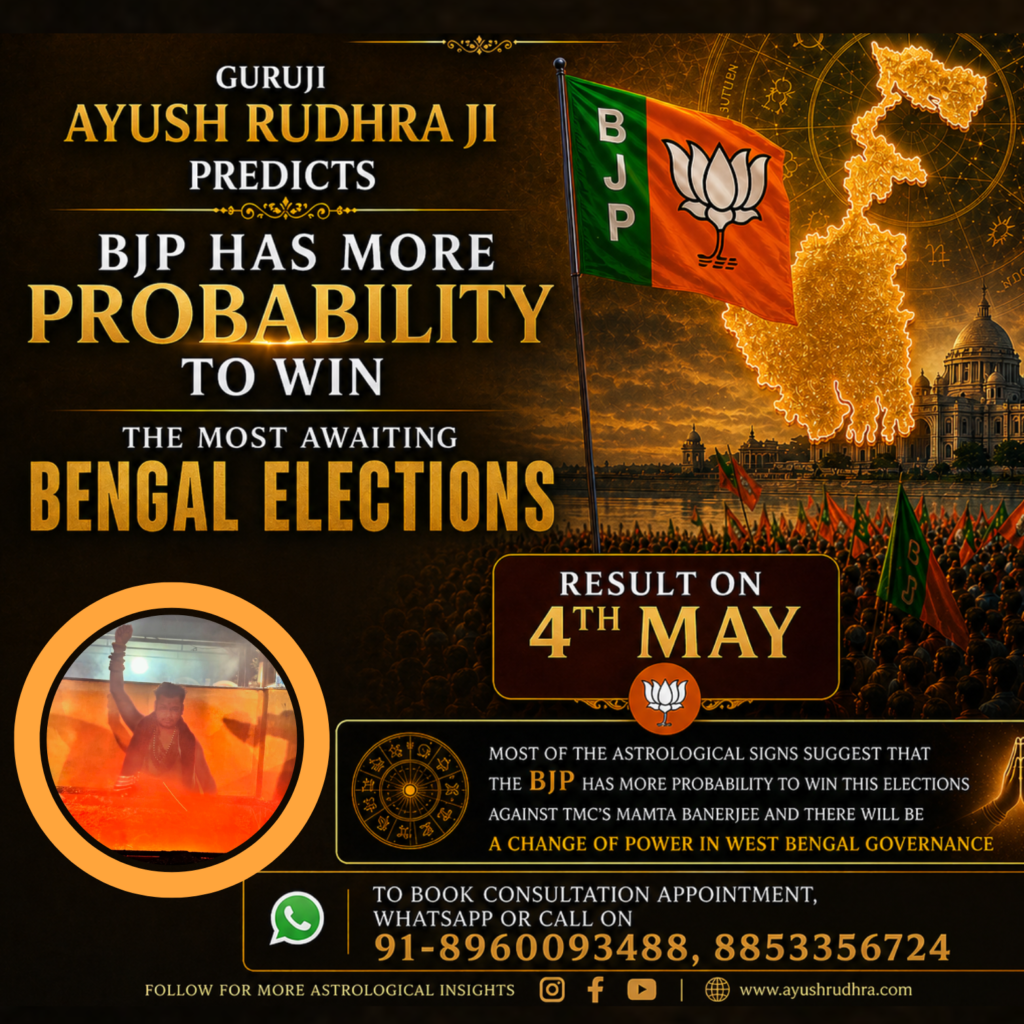 2
2 3
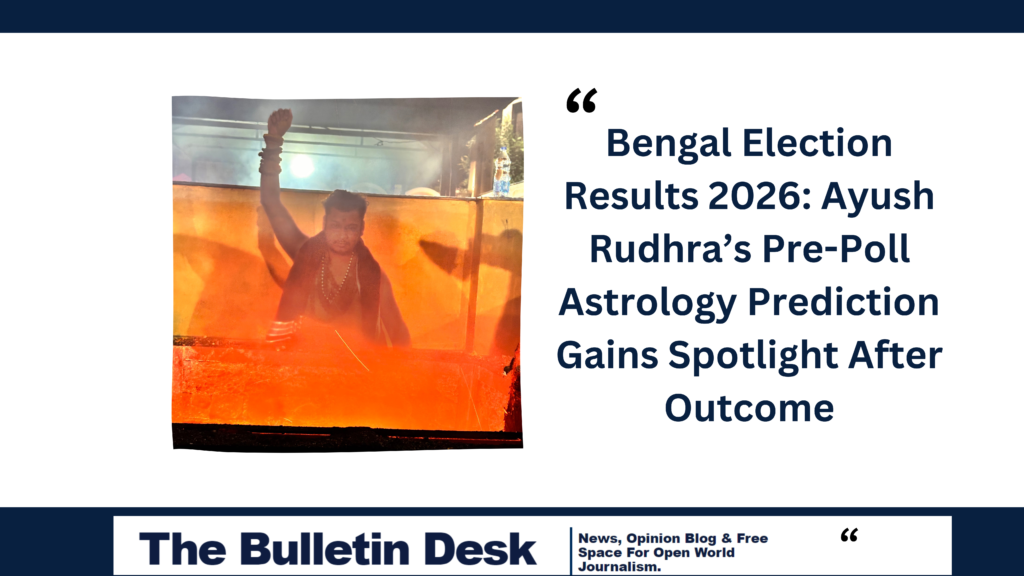
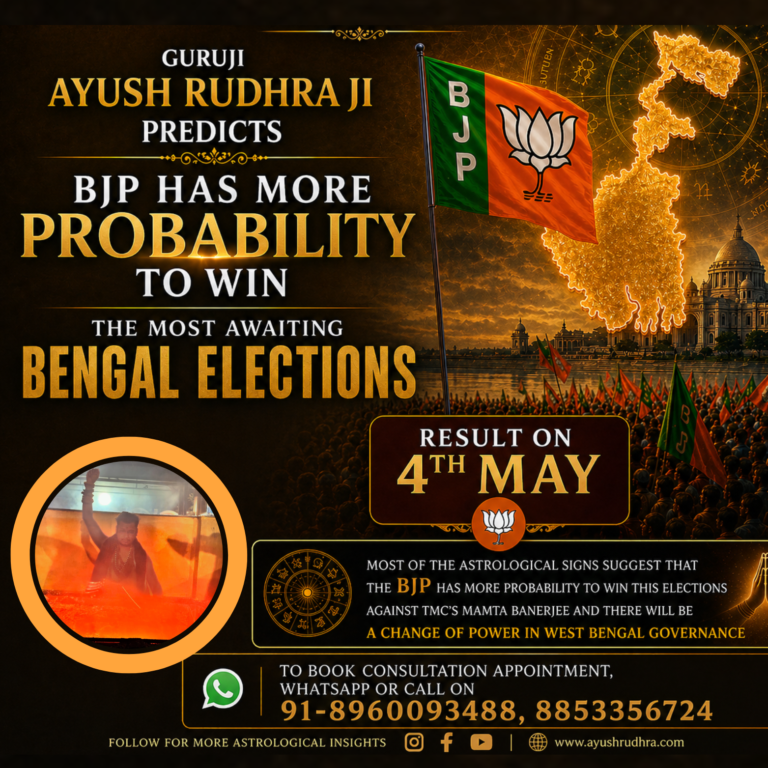
3Forecast indicating BJP’s higher probability aligns with results, sparks debate on astrology-led political analysis The Bulletin Desk | Kolkata | May 4, 2026:The declaration of the West Bengal Election Results 2026 has not only reshaped the state’s political narrative but has also brought renewed attention to astrology-based election forecasting. A pre-result prediction made by astrologer...
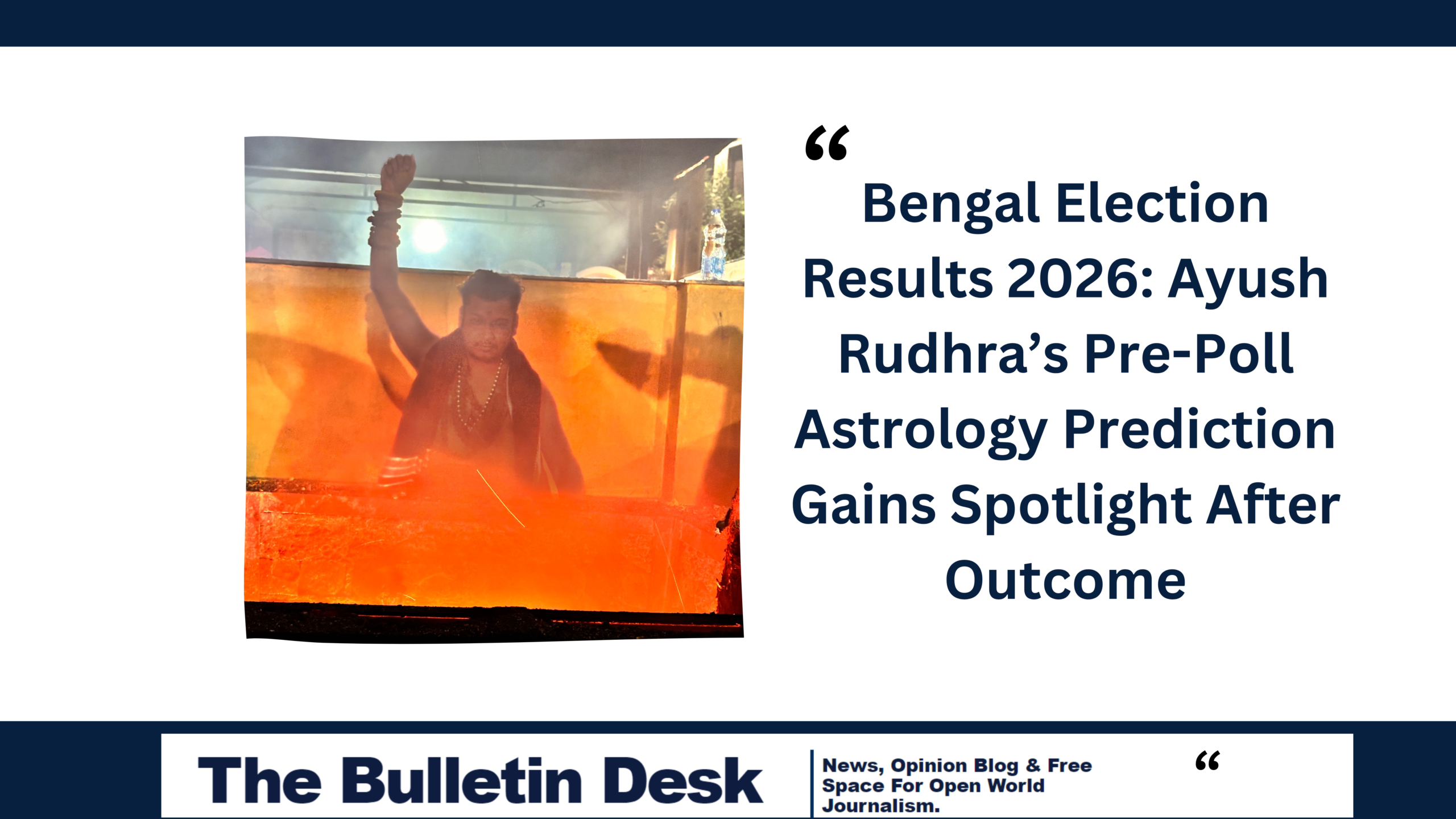
Forecast indicating BJP’s higher probability aligns with results, sparks debate on astrology-led political analysis
The Bulletin Desk | Kolkata | May 4, 2026:
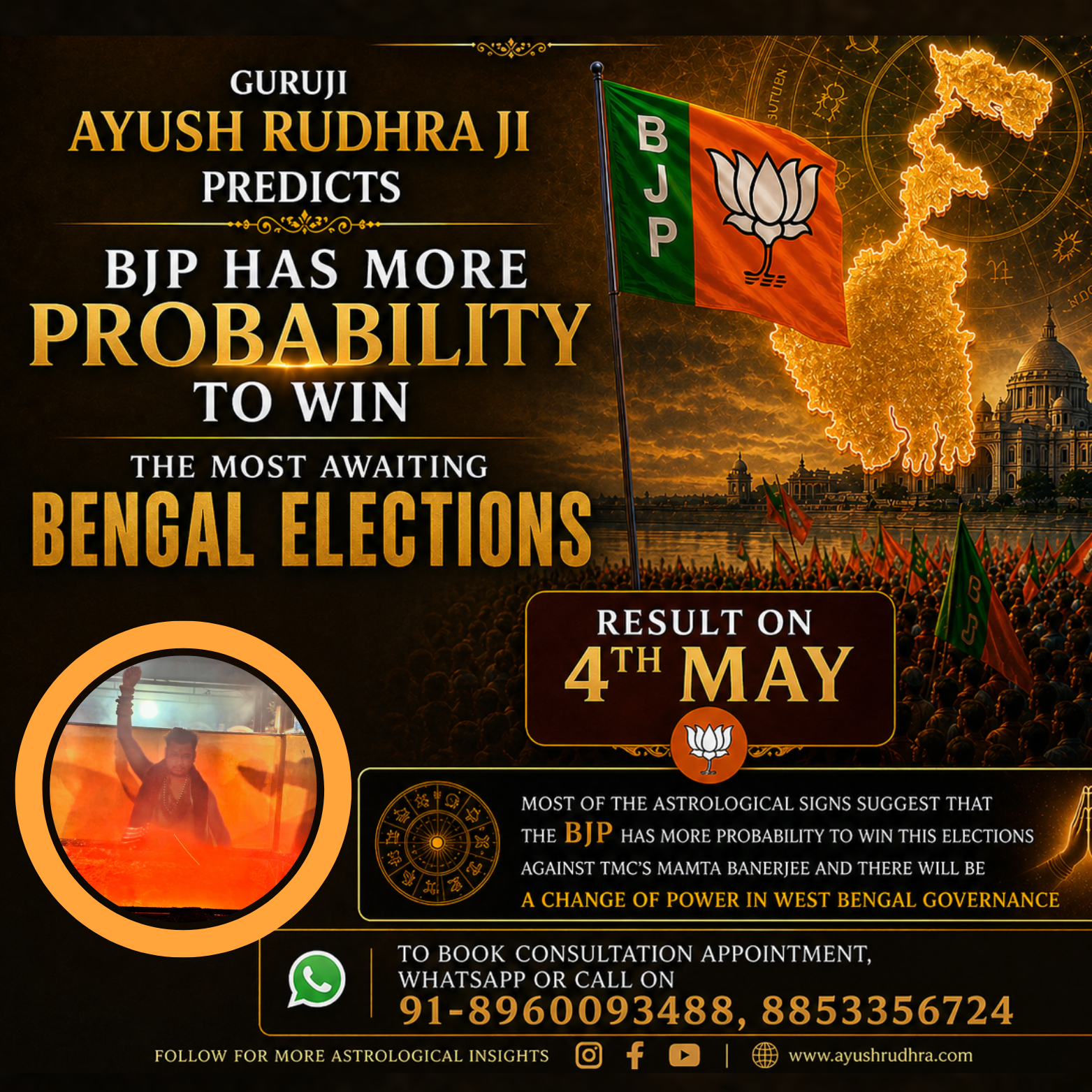
The declaration of the West Bengal Election Results 2026 has not only reshaped the state’s political narrative but has also brought renewed attention to astrology-based election forecasting. A pre-result prediction made by astrologer Ayush Rudhra—suggesting a higher probability of the Bharatiya Janata Party (BJP) gaining governance in West Bengal—is now being widely discussed after the outcome reflected a notable shift in power dynamics.
Shared ahead of the counting day, Rudhra’s analysis focused on planetary transits, graha alignments, and broader cosmic cycles, which, according to him, indicated a phase of administrative transition and restructuring of authority in the state. With the final results echoing a similar trend, the prediction has drawn significant traction across digital platforms.
The Bengal elections 2026 were among the most closely followed political events in India, featuring a high-stakes contest between the BJP and the Trinamool Congress (TMC) led by Mamata Banerjee. While traditional election coverage revolved around voter sentiment, campaign narratives, and ground-level data, astrology-based projections offered an alternative perspective rooted in Jyotish Shastra.
Ayush Rudhra’s forecast highlighted that specific planetary movements during the election period were historically associated with shifts in governance and leadership transitions. Though astrology does not claim certainty, such interpretations are often presented as probability-based insights derived from cosmic patterns.
Following the results, the alignment of Rudhra’s prediction with the outcome has triggered widespread engagement on social media, where users are sharing archived posts and screenshots as proof of the pre-election forecast. The development has fueled discussions on the relevance of astrology in modern political analysis, with opinions ranging from strong endorsement to cautious skepticism.
Ayush Rudhra has previously been associated with multiple high-profile predictions across political, economic, and public domains. Supporters claim that his past forecasts—ranging from political outcomes to broader economic trends—have shown notable alignment with real-world developments, contributing to his expanding following.
While such claims remain subject to interpretation and debate, they have positioned him as a recognizable figure in the niche of political astrology in India, where traditional knowledge systems intersect with contemporary events.
Experts emphasize that astrology functions as an interpretative framework rather than a deterministic science, relying on analysis of time cycles and planetary influences. In this context, predictions like those made for the Bengal elections are viewed as indicative assessments rather than guaranteed outcomes.
Rudhra has also maintained that his forecasts are intended to provide directional insight, not definitive conclusions, and should be considered alongside other analytical approaches.
The West Bengal election results 2026 are expected to influence the national political landscape, especially as parties recalibrate strategies for future electoral contests. The emergence of alternative analysis models, including astrology, reflects a broader curiosity among audiences seeking diverse perspectives on complex political developments.
As West Bengal transitions into a new political phase, the convergence of Ayush Rudhra’s pre-election astrological forecast with the declared results adds an intriguing layer to the post-election narrative. Whether interpreted as analytical insight or coincidental alignment, it highlights the continuing interest in astrology as a lens to understand patterns of change in governance and society.

Editorial coverage from The Bulletin Desk, focused on clarity, reader value and responsible reporting.
Start the Conversation
Add your perspective with respect and clarity. The Bulletin Desk encourages meaningful, responsible discussion.